Monday, July 8, 2013

Volunteering: The Importance of Sitting Still


Because I’m a writer, I spend a lot of time alone. Too much time alone probably. When we lived in North Carolina, I decided to volunteer at a retirement village to get myself out of the house and to show Maggie, who was twelve, a way to get involved in communities.

I was assigned to the assisted living wing of the facility. I drove down an azalea-lined road each Wednesday. I was another set of hands--pouring coffee or cutting craft paper or cleaning paintbrushes. Mostly I stayed in the back of the room.

When the residents ran out of stories to offer one morning during Reminiscence Time, the activity director said, “Miss Karen, (Remember this is the South.) do you remember anything from your childhood?” A wallflower by nature, I panicked as all eyes turned toward me. I said I remembered singing with my grandmother on the front porch. “Well, come up here and sing something for us,” she said.

I wanted to cry.

Not only am I shy, I can’t carry a tune. Nevertheless, I belted out “A Bicycle Built for Two.” A few ladies joined in. I tried “School Days.” More joined in. I sang every song I remembered from Girl Scouts and Bible school. I added the hand motions, and they followed along until everyone was involved in our spontaneous show. No one cared how I sounded. As they left, they shook my hand or patted my arm or hugged me.

One day I found a resident alone in her room, sitting in her wheelchair. I asked if she’d like to help me take a few books back to the library. She reached for them, eager for something to do. On our return, we stopped by a window to watch the ducks in the pond. She rarely spoke to people, but that day she chatted about ducks and all kinds of birds.  She knew a lot about them. Before long she told me about her mother’s garden. She described furniture her father had made. She offered a funny story about her sister. She took my hand and fell asleep for a while.

For weeks I’d walked past a lobby poster with a slogan about helping hands and caring hearts.  Finally on this day, I understood the depth of the message. The residents needed me to be beside them, not behind them.

Yes, practical chores were involved in volunteering there. People in assisted living needed plenty of help, and the staff was busy beyond belief. 

But what was the merit of sitting still and holding a hand on a spring day? 

Immeasurable.

Because I really held her heart.         


Wednesday, June 12, 2013

Our Parenting Mistakes

When my husband Cliff and I adopted a baby from China, we were amazed at all the advice we got. One look at us and people must have known we didn't know up from down.  A woman watched me let Maggie crawl in the grass and offered, "If you let her keep doing that, you'll need to give her at least three baths a day."

I let her keep doing that. I never gave her three baths a day.

We pay attention to parents who know the rules. Along the way, they've tried to help us. They mean well, but so far we've made one mistake after the other.

          We let her watch television.
          We let her eat sugar.
          We let her eat fast-food. 
          We let her find her own friends.
          We let her pick her own books.
          We let her spend her allowance any way she wants.
          We let her choose her own courses.
          We never forced her to play an instrument.
          We don't make her attend church.
          We let her pick her own clothes.
          We let her wear her hair however she wants.
          We did not put her in Honors classes.

We once met friends for dinner, and they seated their children with their backs to the wall-mounted TV set to protect them from seeing the screen. They believe it is a corrupting influence. Throughout the meal, the youngest boy circled around to sit on his mother's lap, feigning affection. But I could see he'd position himself to peek at the TV. Mom and Dad praised him for being a sweet little boy. 

I volunteered during a third-grade party, and we made frosted cookies. A mother took the cookie from her daughter's hand, commenting,"It's too much sugar for you." She handed a tiny piece to the girl and ate the rest herself while her daughter watched. Earlier in the year, I helped another mother with her Halloween party. She gave every child a gift bag stuffed with candy. That same little girl ran to the porch with hers and ate every last piece in a panic before her mother arrived.

In kindergarten Maggie took up with a girl we thought was dreadful. I'll skip over a lot of details about this "popular" girl, but one day she started making hurtful prank calls to Maggie, who couldn't believe a friend would say such things. "You're right," I said. "A friend wouldn't." She cried. It took a long time to get over it, too, but she learned to be discerning about friends all on her own.

Because I was a high school teacher, I saw the ravages of Honors/AP classes. I saw kids run themselves ragged for a handful of points. I saw parents pull their children out of sports, the thing they loved best, to eliminate homework distractions. I saw kids cry because they were being sent to high-powered schools they didn't want to attend. I saw kids earn placement scores that meant they could skip several levels and graduate early from college--unhappy, immature, and unemployable.

There is no AP placement test that measures confidence or joy.

Last week Maggie's school held their annual awards ceremony.  Cliff and I got a confidential email to attend because she'd be a recipient. She earned the Sophomore Language Award in Chinese, which requires as much effort from her as anyone else because she only lived in China for her first 11 months. Her heart calls her to learn it. It's her own ambition, not ours. It's far more than a GPA thing.

She also received the Sophomore Science Award, and she couldn't have had the highest score in the class. At a recent parent conference, her teacher talked about Maggie's intellectual curiosity, her kindness to struggling students, and her helpful attitude in the lab. A few years ago in science, she was required to determine a mystery substance through weeks of experiments. The day before the project was due, a careless girl destroyed all of Maggie's work in an absent-minded wave of her hand.  Test tubes crashed to the floor.  The girl said nothing and walked away.  That indifferent teacher asked our daughter, "Is there anything here you need before I clean this up?"  Maggie was incredulous, but she learned a world of lessons from that hard moment. And she learned them on her own. The person she became out of that experience resulted in the award she achieved last Wednesday. 

I think parenting depends on how you see things.

When you see a cloud, do you want to tack it down, hoping it remains fluffy white or watch it float and reshape on its own?

When you see an empty basket, do you want to control what goes in it?

When a child plays with a pile of boxes, do you smile or do you worry that it's a waste of time and a big mess?

Cliff and I can only think of one rule we followed throughout her life. She had to write thank you notes for every gift she received.

We have tried to raise her to be a good person.

We think everything else will take care of itself.

Friday, May 24, 2013

Third Grade: The Failed Soap and Rope System

Miss Winkelman was strict and unsmiling.  I learned plenty in her third grade class, but none of it was academic.

She kept an Ivory Soap Chart on the wall.  We placed our hands on our desks, so she could check for clean fingernails.  We had to produce a spotless handkerchief or a packet of tissues.  Hair had to be neatly combed.  She recorded her findings after each inspection. 

Perfection in all areas received a tiny Ivory sticker after your name.  One demerit was an orange circle sticker.  Serious failures of personal hygiene received a red sticker.  Our grooming history hung there for all to see.

Over time, I noticed something.  Soaps remained soaps.  Red and orange alarm stickers never varied much either, although I did note that oranges were likely to become reds.  I never saw a red improve to soap status.  I wondered about this.

I also remember Darrell, a boy who could not sit still or remain quiet.  He was a whirlwind from 8 am to 3 pm.  Whenever Miss Winkelman left the room, he was up and running in circles and climbing onto his desk.  Kids laughed and clapped at his antics.  I worried.  She’d return and haul him down to receive his paddling in the cloakroom. 

He never shed a tear.

He never changed his behavior.

Finally she brought rope to school and tied him to his chair when she had to leave.  He was bound at the ankles and wrists.  Yes, he was still, but he never stopped talking or yelling or laughing during her absence. 

When I told this story to my husband, who has been in elementary education for forty years, he was horrified.  He talked about danger and liability.  But mostly he talked about the damage to a boy who needed help.

I see now what puzzled me in that classroom.  The inspection chart, a Procter & Gamble marketing campaign, did not really improve children’s lives.  At our school, it labeled social conditions.  It created embarrassment.  We lived in a working-class neighborhood in that steel town.  Most of my classmates had parents who were shift workers, mothers and fathers who passed each other in the night.  Their children walked home to empty houses after school.  There was no money for pocket-sized tissues.  No one had time to comb or braid hair in the morning.  As my mother would say, theirs was a “catch as catch can” life.

And Darrell needed support, not ropes.  He needed parents who had time for meetings with counselors and teachers who could offer sympathy and lessons in behavior modification instead of punishment.  Surely someone knew that fifty years ago.

I checked Facebook to see if I could find him.  Sure enough, there he was—smiling for the camera and holding a gun.

I wonder if he was thinking of Miss Winkelman.   

Friday, May 10, 2013

Sixth Grade: English Major Math


When our sixth-grade teacher announced we'd be doing story problems, I could hardly wait.  Math with words?  What could be better?  I loved stories.

The problem on our homework sheet had something to do with speeding motorboats.  I told my dad I didn't get it.  He said he could solve it but not in a way that would make sense to me.  He said something about algebra.  Then he drew a picture with boats and a clock face.  There were arrows and something about mph.

"Do you get it now?"  he asked.


"No," I said.  "Where's the story?  Who's in the boats?  What does the lake look like?"

He laughed and explained that wasn't the point.  I'm pretty sure he mentioned x and y.

The rug had been pulled out from under me.  I wish I could say I'd moved past it, but I still harbor a grudge against whoever linked story with math.  I may not know a lot, but I know when a story is not a story.

It wouldn't be that hard to welcome literary folks into that mathematical tent.  Just hire English majors to write the copy for the math people.  Create a real story that begs to be be solved without numbers in the answer, but you'd have to work the problem in order to write the story answer.  Simply a shift in focus.  Because I don't know how to provide the particulars, I'll just resort to blah-blah-blah for the facts that would generate the kind of x and y stuff that warms algebraic hearts.

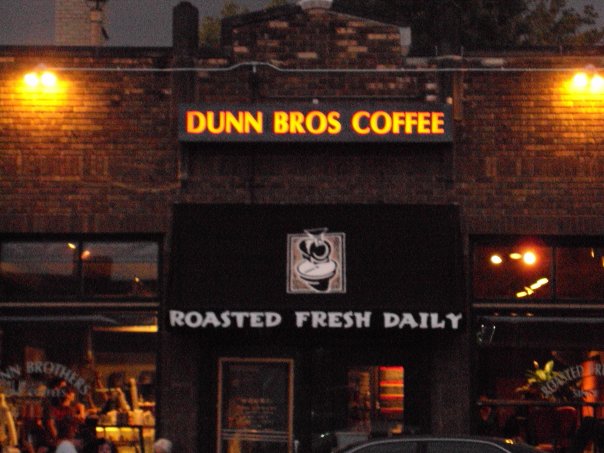
On Monday at blah-blah-blah o'clock, Zoey boards a train in Chicago to visit her sister Lisa, a student at Macalester College blah-blah-blah miles away in St. Paul, MN.  The train goes blah-blah-blah miles per hour, making a blah-blah-blah minute stop in Madison.  Meanwhile Jack, a graphic designer at 3M, leaves his office at blah-blah-blah o'clock, driving down I-94 at blah-blah-blah miles per hour, to hear Randy Sabien play music at Dunn Brothers Coffee blah-blah-blah miles away on Grand Avenue at 8 PM.  When Zoey's train arrives, she and her sister plan to go there, too, for coffee and macaroons.  The fates have already decided that Zoey and Jack are destined to fall in love if she arrives in time to drop her mitten at the counter and if Jack arrives in time to return it to her.  Is this pivotal meeting possible?  How could Randy, who loves macaroons, figure in?

Now that's a story.

English majors would gladly work calculations to see if a rendezvous with love is in the cards.  Upon finding it is, people who write effortlessly would appreciate the chance to describe the meeting.  English majors know the value of two hands touching over a wool mitten.  If it isn't possible, they'd eagerly grapple with the near miss and the pending mystery that could include Randy.

English majors know we are all x looking for y.  However long it takes.


Sunday, April 28, 2013

You Never Know about a Poem

When I was in the ninth grade, Mrs. Billman announced we’d be reading poetry and passed out mimeographed sheets fresh off the press.  We held them to our noses, sniffing the sharp chemical odor, becoming momentarily light-headed.

She’d given us ee cummings’ “anyone lived in a pretty how town.”  It begins: 
                       
                        anyone lived in a pretty how town
                         (with up so floating many bells down)                    

Mixed-up punctuation.  Misaligned parts of speech.    I thought I’d finally damaged my brain, something we were warned about from breathing that damp purple ink.  Nothing made sense.  Surely the Correct Police would storm in and seize these pages.

But no one groaned. 

No one complained. 

No one whispered that cummings was an idiot. 

We were spellbound. 

For the next hour, she performed a teachable sleight-of-hand, asking questions with no apparent right or wrong answers.  She had us suggest possible punctuation changes.  She asked how a pronoun could be a name.  She asked why it mattered.  Hands flew into the air.   

We forgot that we hated poetry.

In Manchester Junior High School, in the far right front classroom in this picture, my world cracked open.  I understood the power of unexpected words in unexpected places in unexpected patterns.  Mrs. Billman explained that breaking grammar and syntax and punctuation rules required knowing them first.

I was skeptical. 

After class I asked her if cummings really knew how to use a comma.  She assured me that he did and that he’d made deliberate choices by avoiding rules.  “Writers know what they’re doing, Karen,” she said.  

I think she knew I would become a writer.  She wanted me to feel every last page-tugging option that awaited me.  She knew the tiniest comma or the shortest adjective could whisper in my heart, posing a beautiful possibility.

Only a ninth grader bent on learning how to craft a meaningful sentence would have asked that question instead of rushing to lunch with everyone else.

Maybe that’s why I love picture books where boundaries crumble.  Sentences float.  Phrases peek.  Words skate up and down the page.  It’s a matter of artistic and editorial choices.

And I learned the value of those choices from e e cummings.

And Mrs. Billman.    


Friday, April 19, 2013

Second Grade: Winning The Lottery

After reading about my kindergarten experience, a mother wrote to me because she worried that her own kindergarten daughter might be learning to coast as I did.  I told her my second grade experience made up for the lackluster beginning.  It was definitely a winning lottery ticket.

Mrs. Miller was cutting edge for the 1950s at Sherman Elementary School in Ohio.  In first grade, we sat alphabetically in wood and wrought-iron desks, complete with ink well holes, in bolted down rows.  In a requisition coup that must have stunned her colleagues, Mrs. Miller got those antiques removed from her classroom.  We sat in clusters of desks with independent chairs, and she switched us up all the time.  I was constantly with different kids.

Brace yourself.  It gets more outrageous.

We were allowed to talk to each other.  We could move freely around the room.  We could go to a hallway drinking fountain on our own.  We knew we'd been given an inch.  No one was crazy enough to take a mile.

She pushed the piano in the hall into our classroom every day.  We wrote songs, inventing melodies and lyrics.  Then we'd figure out dance steps and hand motions.  We were up and hopping and twirling and laughing while composing.  She loved following our lead.

Surely Broadway Bound, she announced we were good enough to write a play about nutrition.  We were divided into food groups.  I still remember our overture's tune: We are some of The Seven Basic Foods.  Eat us every day.  We are very, very good for you.  We help you run and play! (Big finish.  Form two quick rows with the front row dropping to its knees.  Jazz hands.) I was bread, and I still remember the huge, oddly formed piece I drew on paper with its rich, brown crust.  We researched from library books she brought in on a rolling metal cart.  Who knew wheat and yeast could be fascinating?  No slice ever danced with more meaning.

Then there was the memorable day she asked us to start bringing in boxes.  For two weeks we stacked them at the back of our classroom, imagining the wonders ahead.  Finally she took us on a walk through the neighborhood.  We visited a grocery store, the fire department, a variety store, a park, and a soda fountain.  She took pictures of each site and put us in groups to construct our assigned place from boxes.  We studied those photographs for colors, shapes, and details that would have left Frank Lloyd Wright beaming.  Every spare moment was devoted to working on those boxes, taping and stapling and painting our locations.  Then we placed them on a gigantic grid of streets and sidewalks.

I'd give anything for a picture of our project.  I'd love to see just one of our class plays.

But I carry their joy, along with dozens of other second grade adventures.  Over fifty years later I remember our ambition.  Our inventions.  Our faith in ourselves.  And I can see Mrs. Miller smiling, proud as punch to be in that room with us.  

In her creative hands, school wasn't inflicted on us.  It was created with us.

And to think so much glorious education could come from a shoe box.   

Friday, April 5, 2013

Still Sorting and Folding

I know SCBWI members haven't wondered what happened to me after my first essay appeared twenty years ago in their bulletin (Read my previous post.).  For those who are thinking about giving up on writing, it might be worth knowing, however, that I finally got published.  So, yes, it's possible.

Money and awards don't roll in.  Editors and agents don't call. Hollywood hasn't offered a movie deal.

Well, what was the point, then, you might ask.  I wondered that myself for a while.

Shortly after I wrote that 1992 essay, I found a new editor in the bulletin's "Publisher's Corner" and began sending her picture book manuscripts.  She asked to see more, finally found one she loved, and called.  I was thrilled, but after many, many, many months, it was clear the project would never happen for complicated reasons.  She wrote me a beautiful letter, urging me not to stop writing despite the disappointment.

But I stopped.  I was heartbroken. I couldn't see the point anymore.  Also, my life had dramatically and gloriously changed because we'd adopted a baby girl from China.  It was easy to shift my focus to her.

Then when she was in kindergarten, she asked, "Mama, did you ever want to be anything?"

She caught me.  I thought I'd been successfully hiding behind play dates and bake sales, but she'd been wondering about me.  I explained I'd wanted to be a writer once and actually read her that almost-published story.  "It's good," she said.  "Write another one."  She believed so completely in me that I started again.  I had, in fact, been wondering about her, too, and the mystery that brought us together.  I began writing a fanciful journey for her.  My picture book, Sweet Moon Baby: An Adoption Tale, was published by Alfred A. Knopf in 2010.

When I sat in the Random House lobby after meeting my editor, I understood success had nothing to do with my fame or fortune or mahogany paneling or a crisp white blouse--the details I'd envisioned in 1992.  My success was about showing my daughter how a person collects the pieces of a broken dream and tries again.  That was the point.

At a bookstore signing, a little girl said I was the only famous person she'd met.  She told me she wanted to be an author and asked me what writing was like.  I told her it was like doing laundry, only you sort and fold words daily.  She smiled and agreed.  She said she wrote stories about her friends all the time.  That was the point.

When I read my book at a school assembly, an adopted Chinese girl announced, "I'm the real sweet moon baby."  She had found a metaphor to hold in her heart.  That was the point.

A mother bought my book to support local authors but was puzzled when her young son, who was not adopted or Chinese, repeatedly wanted her to read it at bedtime.  She asked him why and he explained, "I like how all the animals help the baby get home.  I would help her, too."  That was the point.

Now I understand why books for children matter.  I understand why I write them and that the point is far greater than my own success.

I just keep doing it.

It's that easy.

It's that hard.

Whether I ever get a second book published or not.

I mean until I get a second book published.